Significance of Software Testing
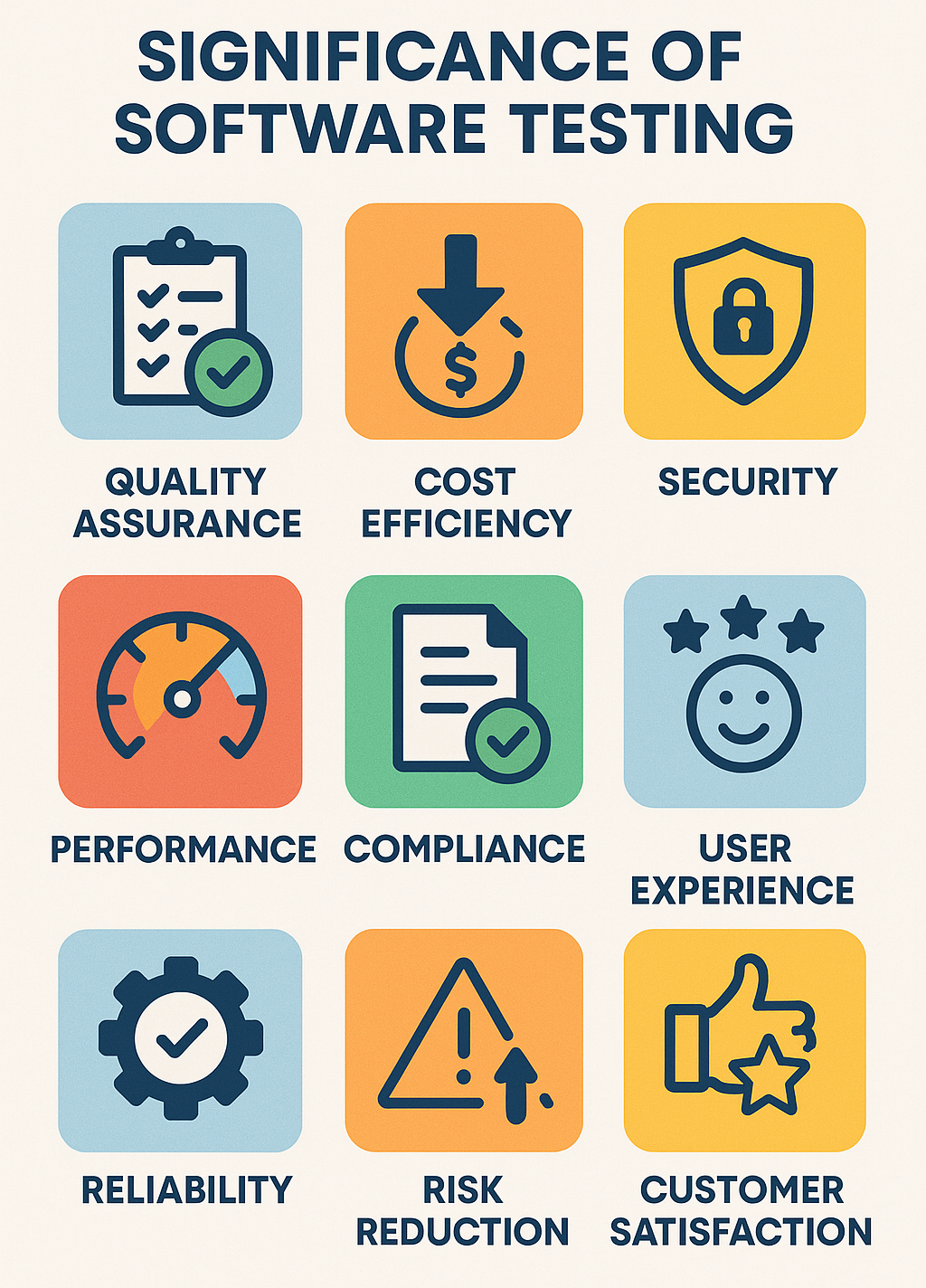
Quality Assurance
- Testing ensures that the software works as it should and meets the standards of quality. It’s like checking the quality of a product before it’s sold to make sure it’s well-made and free of defects. This helps ensure the software is reliable and does what it’s supposed to do.
Cost Efficiency
- Catching and fixing bugs early in the development process through testing saves money. It’s cheaper to fix a small problem now than to deal with a big issue later on. Testing helps avoid costly errors and rework by identifying issues before the software is widely used.
Security
- Testing helps protect the software from vulnerabilities and threats, like hackers. By identifying and fixing security flaws, testing ensures that user data and sensitive information are safe and that the software isn’t easily compromised.
Performance
- Testing checks if the software runs smoothly and efficiently under different conditions. It’s like making sure a car can drive well in different weather conditions. Performance testing ensures the software can handle heavy use, runs quickly, and doesn’t crash or slow down unexpectedly.
Compliance
- Testing makes sure the software follows legal and industry standards. This is important in areas like finance or healthcare, where the software must meet strict regulations. Compliance testing ensures the software doesn’t break any rules.
User Experience
- Testing helps make sure the software is easy and pleasant to use. It’s like ensuring a product is user-friendly and intuitive. Good testing ensures that the software meets user needs, looks good, and works as expected, making users happy.
Reliability
- Testing ensures that the software is dependable and works correctly every time. It’s like checking that a machine runs properly each time you use it. Reliable software builds trust with users because they know it won’t fail when they need it.
Risk Reduction
- Testing helps identify and address potential risks, such as software failures or security breaches. By catching these risks early, testing reduces the chance of problems happening after the software is released, protecting both the users and the business.
Customer Satisfaction
- Ultimately, testing ensures that customers are happy with the software. When software is tested thoroughly and works well, it meets customer expectations and builds their trust in the product. Satisfied customers are more likely to keep using the software and recommend it to others.
Module Review
Click to start the definition to term matching quiz
Drag the defintion to the correct term.
Definitions
Testing helps avoid costly errors and rework by identifying issues before the software is widely used.
By catching these risks early, testing reduces the chance of problems happening after the software is released, protecting both the users and the business.
By identifying and fixing security flaws, testing ensures that user data and sensitive information are safe and that the software isn’t easily compromised.
Ensures the software doesn’t break any rules.
It’s like making sure a car can drive well in different weather conditions.
Reliable software builds trust with users because they know it won’t fail when they need it.
It’s like checking the quality of a product before it’s sold to make sure it’s well-made and free of defects.
When software is tested thoroughly and works well, it meets customer expectations and builds their trust in the product.
Good testing ensures that the software meets user needs, looks good, and works as expected, making users happy.
Risk Reduction
Reliability
Cost Efficiency
Quality Assurance
User Experience
Compliance
Security
Customer Satisfaction
Performance
Click to start the multiple choice quiz
Choose from the listed options below.
Score: : 0 / 14 [0.00 %]
Question 1 of 14: Why is reliability important for users?