Scrum
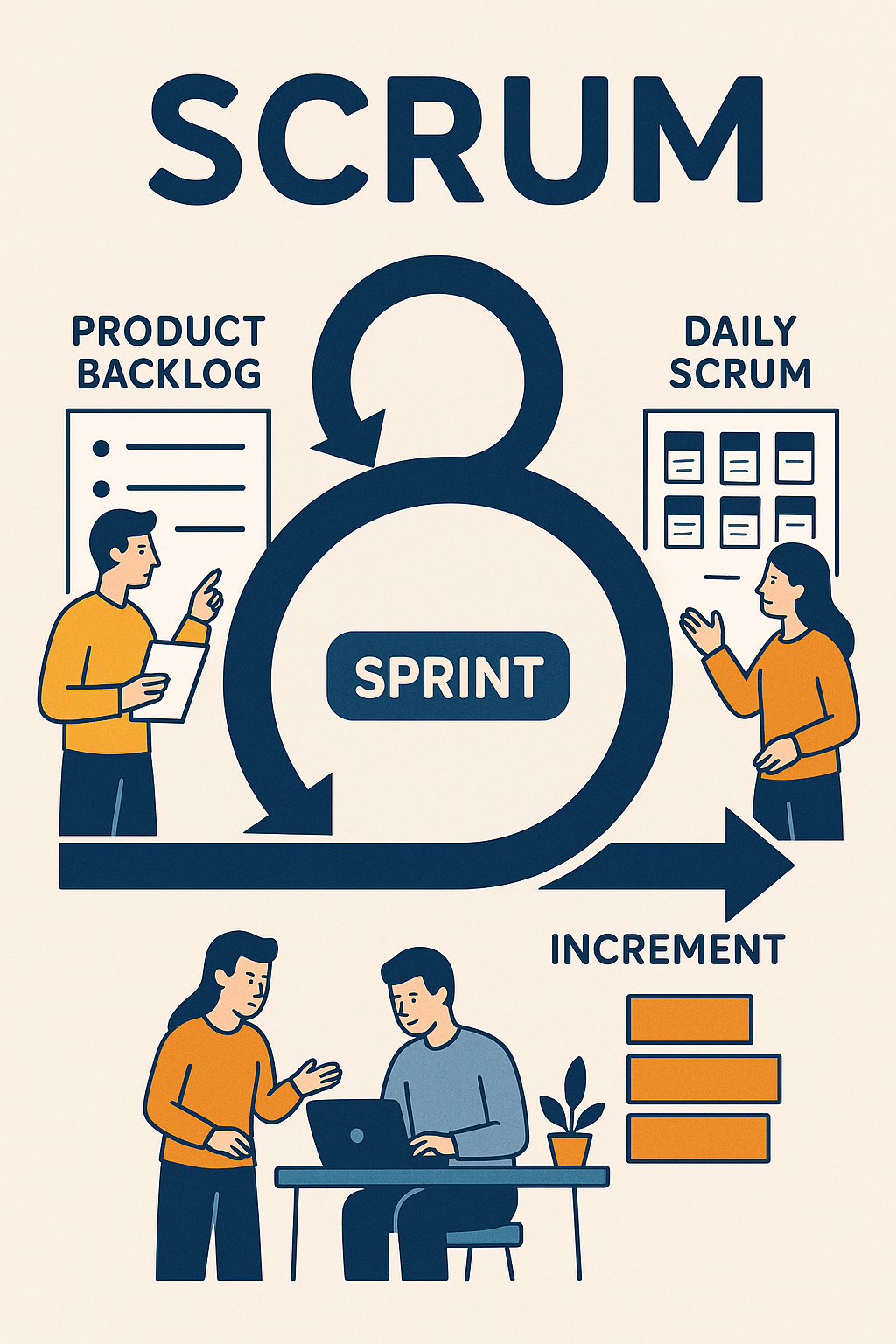
- Scrum is an Agile framework designed to help teams work collaboratively and efficiently on complex projects. It focuses on delivering iterative and incremental value.
Roles in Scrum
- Scrum defines three primary roles, each with distinct responsibilities:
Product Owner
-
The Product Owner represents the customer or stakeholders. They are responsible for defining and prioritizing the product backlog, ensuring the team works on the most valuable features first. Their role involves:
-
Managing and refining the Product Backlog.
-
Ensuring that the team understands the items in the backlog.
-
Deciding when to release increments of work.
-
Scrum Master
-
The Scrum Master acts as a facilitator for the team, ensuring Scrum practices are followed. They help the team stay focused on the work, remove obstacles, and promote continuous improvement. Responsibilities include:
-
Coaching the team on Scrum principles.
-
Ensuring the team’s productivity by removing impediments.
-
Protecting the team from external distractions.
-
Development Team
-
The Development Team consists of professionals who work on delivering the product increment. They are cross-functional, self-organizing, and responsible for:
-
Delivering a potentially shippable Increment of the product at the end of each sprint.
-
Organizing themselves to complete the work.
-
Estimating and committing to work for each sprint.
-
Events in Scrum
- Scrum organizes work into time-boxed events that provide structure and regular opportunities for feedback and improvement.
Sprint
- A Sprint is a fixed-length event (usually 2 - 4 weeks) during which a specific increment of the product is developed. It is the heartbeat of Scrum, where ideas turn into value. Each sprint includes the following events below.
Sprint Planning
- This meeting happens at the start of each sprint, where the team, led by the Product Owner, selects the work to be done. The team determines how they will deliver the selected work.
Daily Scrum (Standup)
-
A 15-minute meeting held every day of the sprint, where the team synchronizes its work. The team members discuss:
-
What they did yesterday.
-
What they plan to do today.
-
Any impediments they are facing.
-
Sprint Review
- This meeting occurs at the end of the sprint. The team demonstrates the work completed to the stakeholders for feedback. It allows for inspection of the product increment and possible adaptation of the Product Backlog.
Sprint Retrospective
- The Sprint Retrospective is held after the Sprint Review and before the next Sprint begins. The team reflects on how they worked during the previous sprint and identifies improvements to implement in the next sprint.
Artifacts in Scrum
- Artifacts are tools to keep track of the work and ensure transparency. There are three main artifacts in Scrum:
Product Backlog
- The Product Backlog is an ordered list of all the work that needs to be done to build the product. The Product Owner manages this backlog, prioritizing items based on business value and feedback.
Sprint Backlog
- The Sprint Backlog is a selection of items from the Product Backlog that the Development Team commits to completing in a sprint. It also includes a plan for how the work will be accomplished.
Increment
- The Increment is the sum of all the Product Backlog items completed during a sprint, plus any work completed in previous sprints. It must meet the team’s Definition of Done and be in a usable state.