Waterfall
- Waterfall is a traditional, linear project management methodology often used in software development, construction, and manufacturing. Unlike Agile or iterative approaches, Waterfall follows a sequential process where each phase must be completed before moving to the next one. This makes it a structured and predictable method, ideal for projects with clear, well-defined requirements from the beginning.
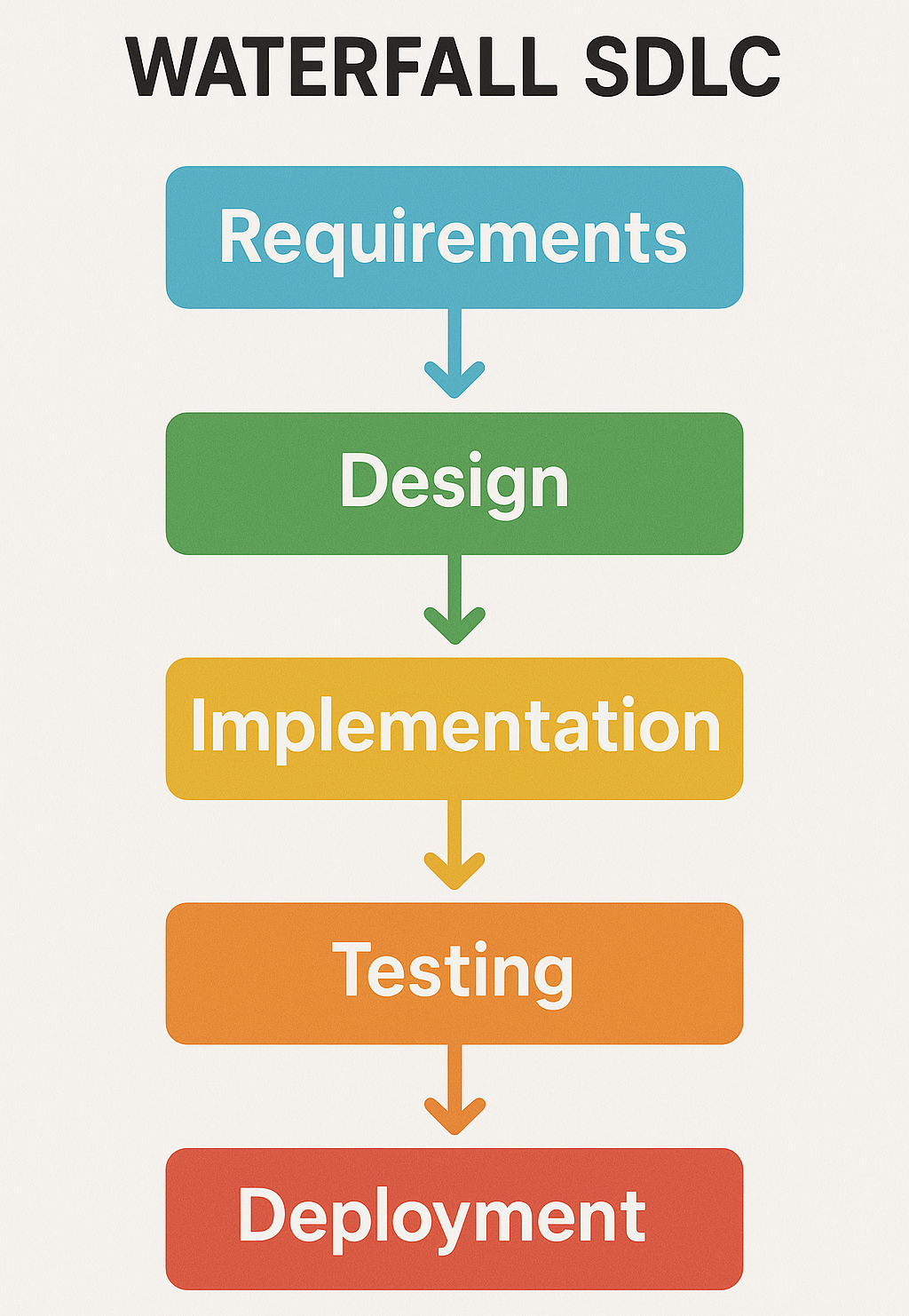
Characteristics of Waterfall Project Management
-
Linear Progression: The project flows in a straight line through predefined phases. Each phase must be completed before moving on to the next.
-
Well-Defined Requirements: All project requirements are gathered at the start. Once the project begins, there’s little flexibility to change the scope or requirements.
-
Detailed Documentation: Extensive documentation is created throughout each phase, making it easier to track progress and have a clear understanding of the work.
-
Phases are Isolated: There is minimal overlap between phases. Each has specific goals and deliverables, which must be completed and reviewed before moving forward.
-
Inflexibility: Once the project is underway, it's difficult and costly to change scope or requirements because any change requires revisiting completed phases.
-
Testing Happens Late: Testing is done only after all development work is finished, leading to potential issues being discovered late in the process.
Phases of the Waterfall Model
Requirements Gathering
- In this initial phase, project requirements are collected and documented. This typically involves stakeholders, business analysts, and the project team working together to define the project’s goals, functions, and specifications. The output of this phase is a requirements specification document.
System Design
-
Based on the requirements gathered, system architects and designers create a system design document. This phase includes defining the software and hardware architecture, databases, user interfaces, and system integrations.
-
There are usually two levels of design:
- High-level design: Describes the overall system architecture.
- Detailed design: Describes each component of the system in more detail.
Implementation (Development)
- In this phase, developers start building the product based on the design specifications. The work is usually broken down into smaller modules, which are developed and later integrated. This is where coding and development work is done.
Integration and Testing
- Once development is complete, the system is assembled and tested as a whole. This phase ensures that the product works as intended and that all components function together without issues. Testing aims to identify bugs, integration problems, and other defects that need to be addressed before deployment.
Deployment (Installation)
- After successful testing, the product is deployed to the production environment. This phase includes setting up the necessary infrastructure, installing the product, and preparing it for use by the end users.
Maintenance
- After deployment, the system enters the maintenance phase, where it is supported, and any issues or bugs that arise are fixed. Maintenance also includes updating the system to accommodate changes or enhancements over time.
Advantages of Waterfall
-
Clear Structure: The linear approach makes it easy to understand and manage, especially for teams with less Agile experience.
-
Easy to Manage: Since the process is divided into clear phases, it's easier to track progress and milestones.
-
Well-Documented: Every phase results in documentation, making it easier to maintain and hand over the project to new team members or stakeholders.
-
Good for Fixed-Scope Projects: Waterfall is ideal when project requirements are well understood upfront and unlikely to change.
Disadvantages of Waterfall
-
Inflexibility: Waterfall is rigid, making it difficult to accommodate changes once the project has started.
-
Late Testing: Since testing happens after development, issues are often found late in the process, which can delay delivery or require extensive rework.
-
Risk of Requirement Gaps: If requirements are not fully understood in the beginning, the project can face significant challenges, as changes are difficult to implement.
-
Customer Involvement is Minimal: Once the initial requirements are gathered, customer feedback isn't typically incorporated until the product is complete.